

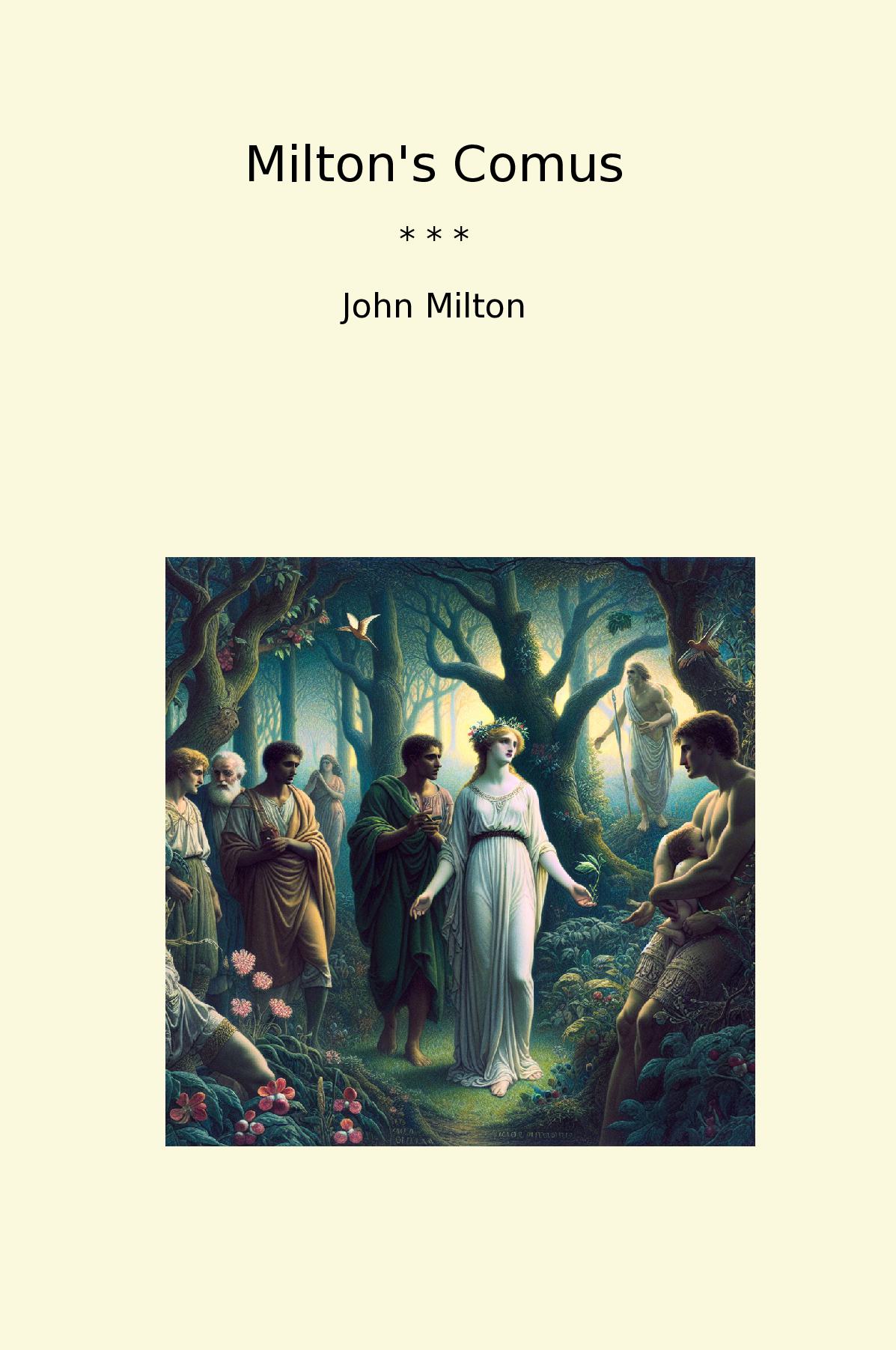
Description
‘Comus,’ a masque written by John Milton in 1634, is a quintessential work of English literature that explores themes of temptation, virtue, and the power of chastity. The narrative unfolds in a lush, enchanted forest where a virtuous lady, lost and vulnerable, encounters Comus, the God of Revelry. Comus embodies hedonism and attempts to seduce the lady into abandoning her moral resolve. However, her steadfastness, aided by her brothers and the wisdom of the Spirit of the Wood, prevails.Milton’s use of rich, lyrical language and intricate verse captivates the reader, while the poem’s allegorical elements invite deeper reflections on the conflicts between innocence and indulgence. Rooted in the context of the early 17th-century England, ‘Comus’ serves as both a cautionary tale and a celebration of virtue. This captivating work remains a significant exploration of moral philosophy, illustrating Milton’s mastery of poetic form and his enduring relevance in literary history.



Reviews
There are no reviews yet.