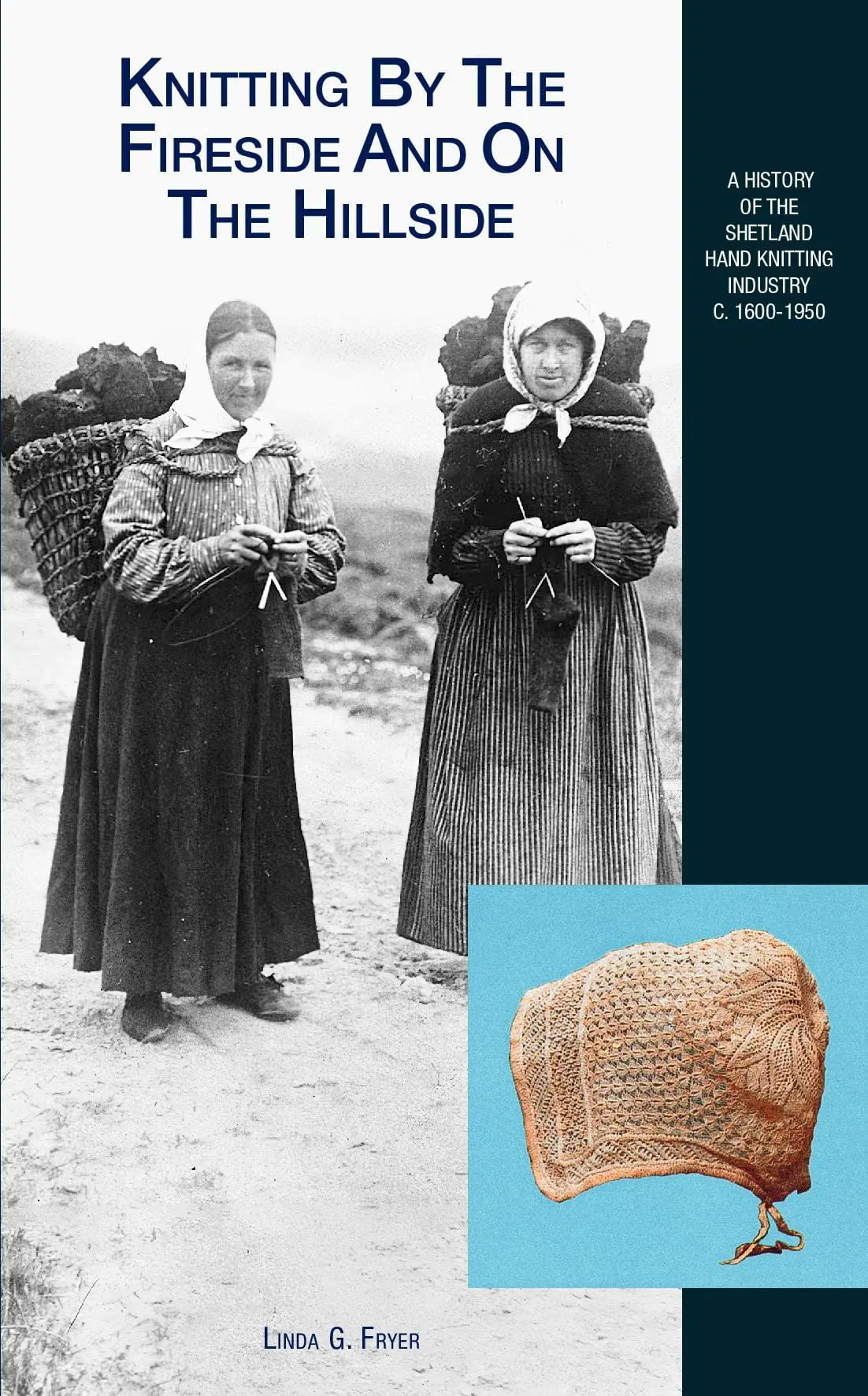
This book traces the history of the Shetland hand knitting industry from its earliest recorded occurrence in 1618 up to 1950. Traditionally the Shetland economy was based on fishing, crofting and knitting, with the knitting being undertaken by women. It was due to the quality of the native wool and to the highly developed knitting skills of the islands’ women, that Shetland became renowned for its superb hand knitting. Unlike many other, Shetland women were able to adapt their skills to changing market, thus the evolution of Shetland lace in the 1830s, fine underwear in the 1880s and Fair Isle knitting in the 1920s, all managed to ensure that handknitting remained an important strand in the Shetland economy.


Additional information
Weight
0.301 kg
Dimensions
22.5 × 14 × 1.2 cm
Reviews
There are no reviews yet.
Be the first to review “Knitting by the Fireside and on the Hillside” Cancel reply
Reviews
There are no reviews yet.