

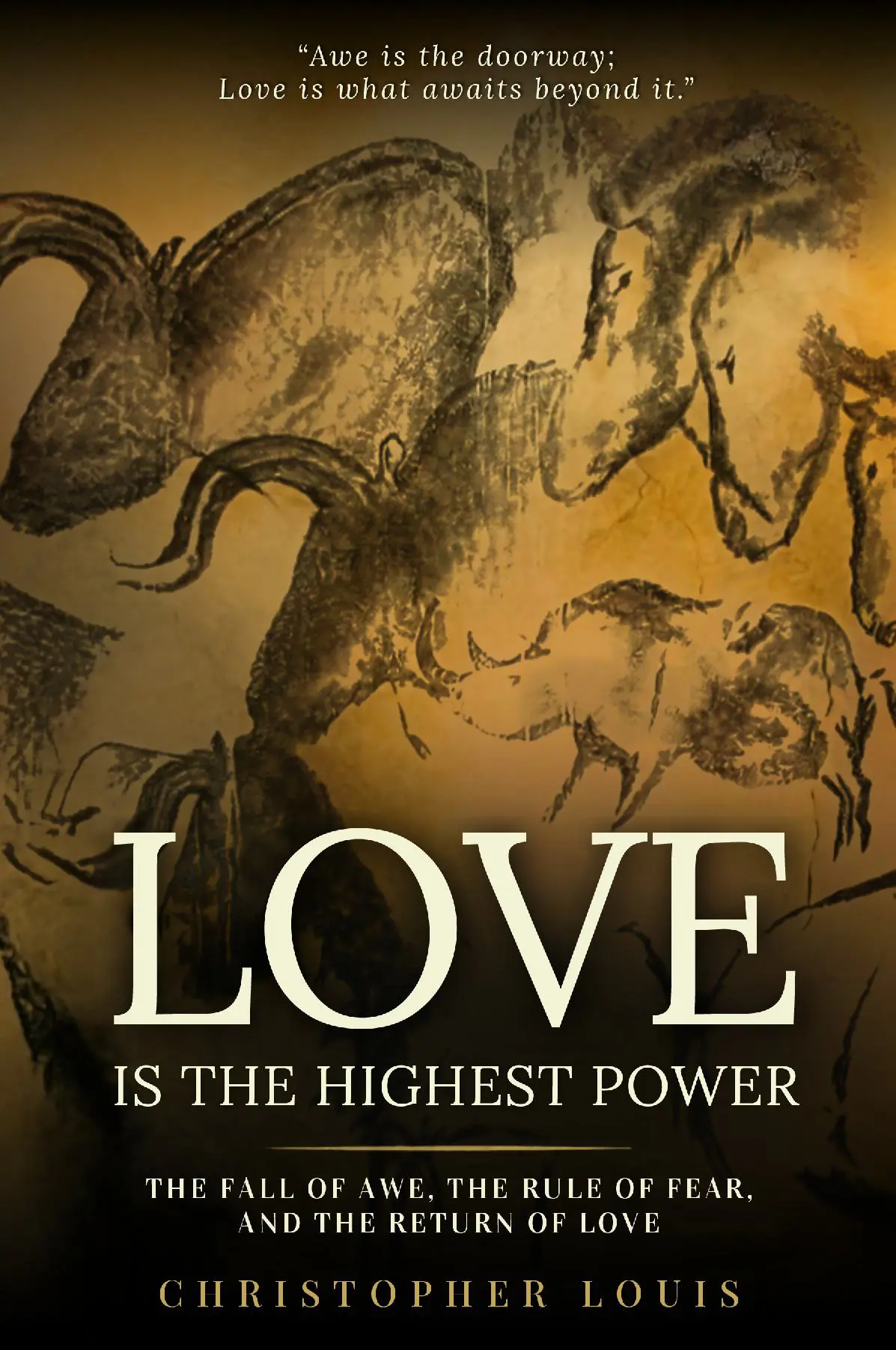
Description
Long before there were creeds, there was awe. More than twenty thousand years ago, people carried fire and pigment deep into the cave at Chauvet and painted animals on walls that stood in darkness. Eleven millennia ago, the builders of Göbekli Tepe raised carved pillars on a hilltop in what is now southeastern Turkey. Whatever these first sacred acts meant to the people who made them, they answered wonder with beauty and gathered communities around it. Love Is the Highest Power asks what became of that impulse, and how religions that proclaimed a God of love came to govern so much of human life through fear.
Drawing on archaeology, religious history, philosophy, and the psychology of awe, Christopher Louis traces how the pressures of settled life, among them growing populations, competition for resources, and the need for coordination and control, turned shared reverence into structural fear. He follows belief as it hardened into identity and dogma as it became law. He examines the holy wars and inquisitions carried out in the name of a loving God, and he gives the same careful attention to the wounds that fear-based religion still leaves in those raised within it.
The second half of the book turns toward recovery. Louis follows the mystics, among them Marguerite Porete, Julian of Norwich, Meister Eckhart, and Teresa of Ávila, who found love at the center of the same traditions that sometimes condemned them. From there he moves to the return of wonder in ordinary life, the discipline of living with unanswered questions, and a sustained argument, tested against its strongest objections, that love is the measure by which every belief should be judged.
The book is written from within no single tradition and is addressed to all who seek: those shaped by religion, those wounded by it, those watching someone they love struggle with it, and those who simply want to understand why it holds such power over human lives.


Reviews
There are no reviews yet.