

Description
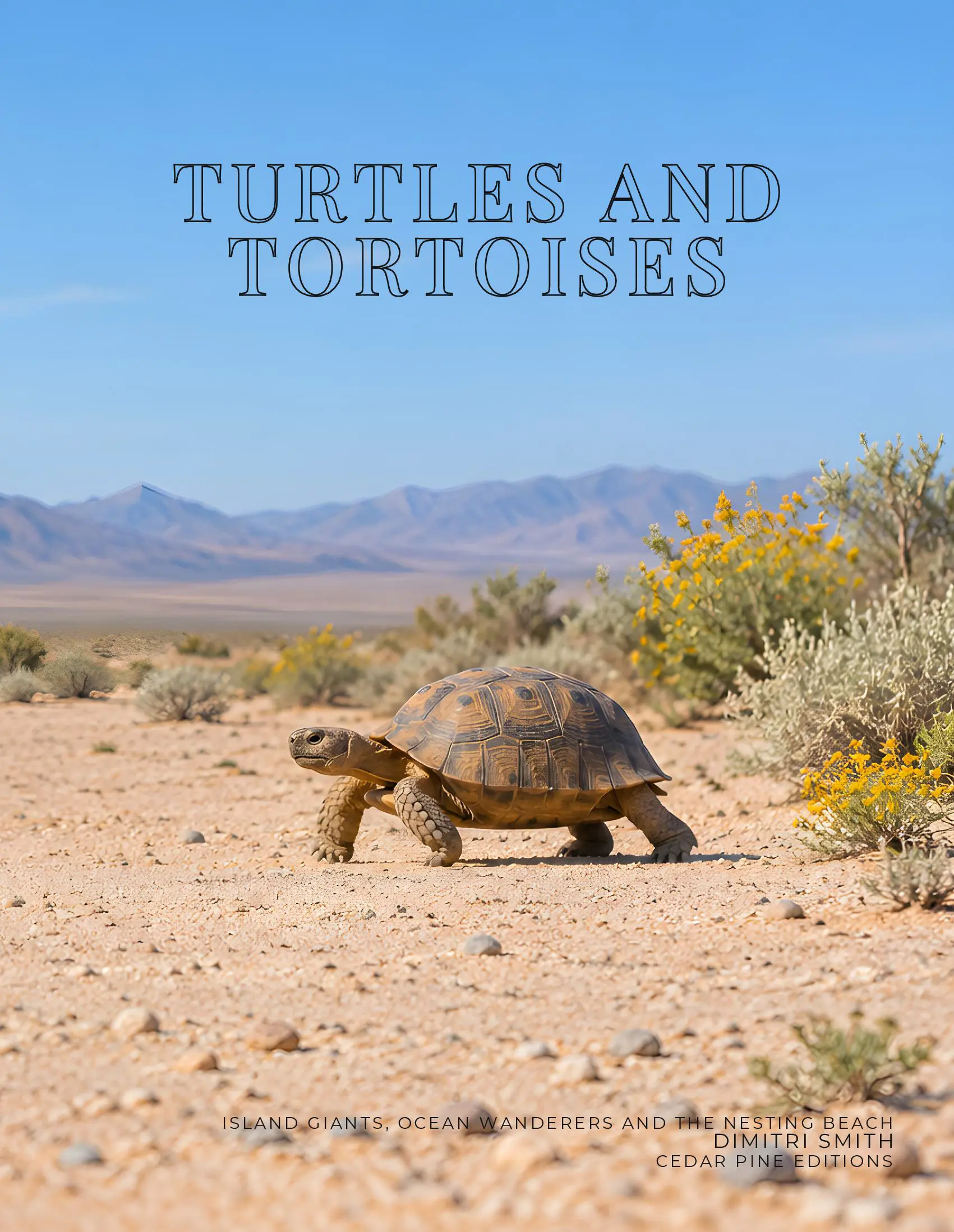
Coffee Table Book of: Turtles and Tortoises is a large format book of turtles and tortoises, printed edge to edge in colour, one picture to a page and the widest carried across two: giant tortoises of remote islands, tortoises of dry grasslands, scrub and desert, box turtles of woods and prairie, turtles of ponds, rivers and swamps, and the sea turtles of reefs, beaches and the open sea, with heads, feet and shells seen close, nests, eggs and hatchlings, and the empty places where they live, at many hours and in every season.
Giant tortoises drink at a rain pool on a misty volcanic highland, graze a green meadow in soft rain, stretch a saddleback neck toward a tree cactus and crowd into the shade of a low bush on a hot coral island.
Box turtles walk the damp forest floor after summer rain, one shut tight in its hinged shell, and an ornate box turtle crosses the prairie at dusk.
At sea a green turtle glides through turquoise water and rises to breathe at sunset, a loggerhead swims over pale sand, a leatherback crosses the deep blue open sea, a hawksbill feeds at a reef sponge and a young loggerhead drifts among floating seaweed. On the beaches a green turtle digs her nest by moonlight, a loggerhead crawls back to the sea at dawn, olive ridleys come ashore at dusk, round white eggs lie in their nests, and tiny hatchlings dig up through the sand and run for the first wash of the waves.
Seen close are the wrinkled head and beak of a giant tortoise, the thigh spurs of a spurred tortoise, the red eye of a box turtle, the snorkel snout of a softshell, the hooked beaks of the hawksbill and the loggerhead, and the shells of a giant tortoise, a star tortoise, a hawksbill and a wood turtle.
Short notes run through the book, on how turtles and tortoises feed, dig, nest and hatch, how their shells are built, and the long journeys of the sea turtles: giant tortoises lie for hours in shallow rain pools, which help keep them cool and free of insects, the map turtle is named for the fine pale lines on its shell, like the lines on a map, the leatherback is the largest turtle alive, with a leathery back instead of hard plates, and the loggerhead is named for its very large head, which holds powerful jaw muscles.
Printed in full colour on heavy 150gsm coated paper at 216 x 279 mm (8.5 x 11 inches), as a paperback.



Reviews
There are no reviews yet.