

Description
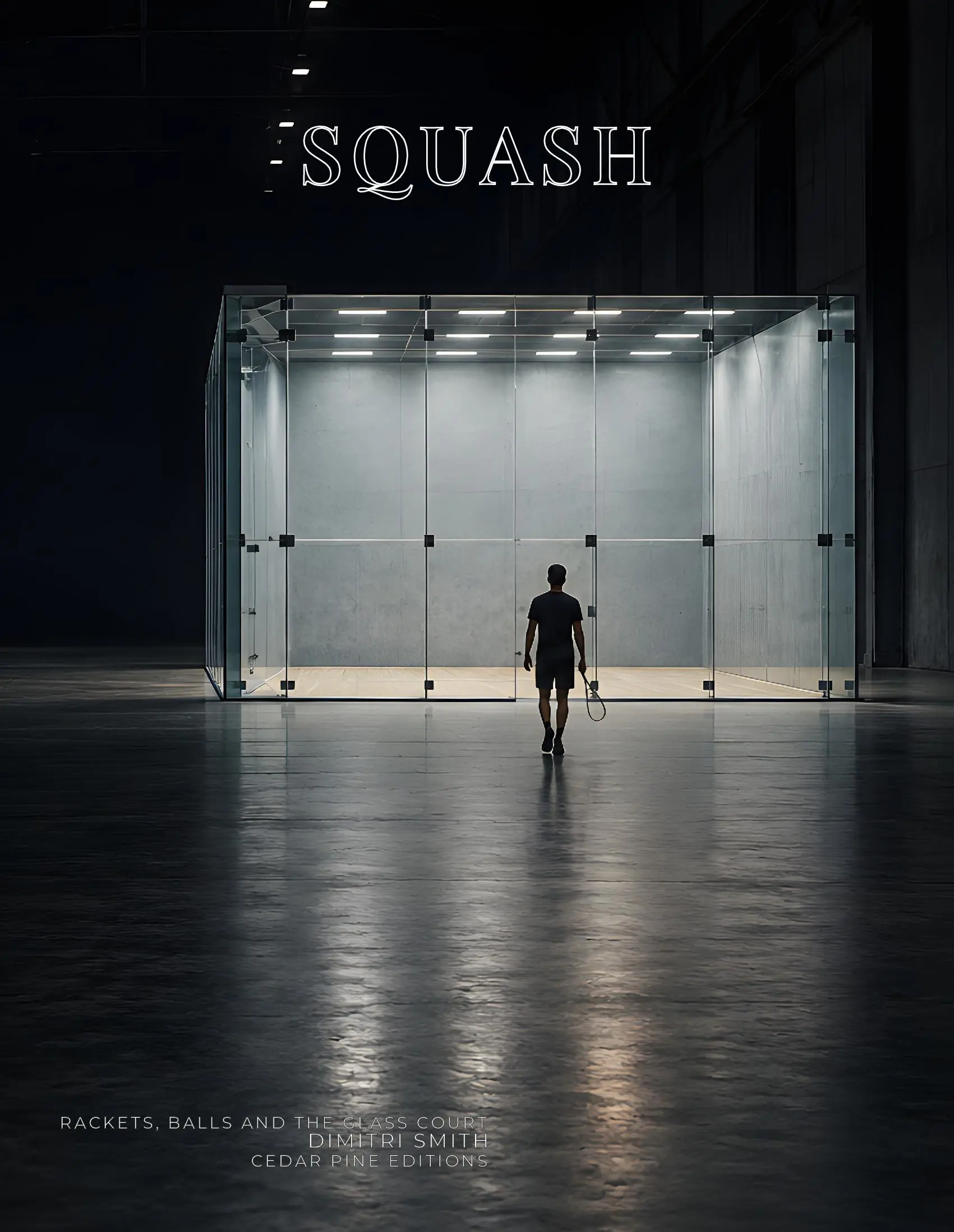
Coffee Table Book of: The Sport of Squash is a large format book about squash, the racket game played in a four walled court. It is printed edge to edge in rich colour, one picture to a page and the widest carried across two pages: rackets and small black balls, the white walls and red lines of the court, glass courts standing empty, the kit being made and cared for, the old ways of the game, and a few players seen far off in plain dark clothing.
The kit is laid out plain: a light racket seen from above and another leaning on a white wall, balls with their coloured dots, court shoes with gum soles, protective glasses, a long racket bag, a fresh grip half wrapped, the tight strings of a racket seen close, a towel and a water bottle by the wall, and a skipping rope and a ring of cones for footwork.
The making follows black rubber half shells waiting to be joined into balls, a racket half strung, a reel of string, carbon fibre cloth and bare frames, panels of clear glass for a glass court, pale maple boards for a floor, white plaster, and a red line painted between strips of tape. The past runs from a high yard wall like those the older game of rackets began against to wooden rackets with small round heads and leather grips, a coil of gut, old balls in a wooden bowl, canvas plimsolls, the narrow gallery of an old court and courts built open to the sky.
Then the places, empty at every hour and in every season: glass courts on a stone square at dawn, in a bare hall, on a desert plain at sunrise and on a beach at dusk, court buildings of brick, stone and timber in frost, river fog and snow, beside a city canal, among olive trees and cherry blossom and by a frozen lake, and a few small players far off, walking out to a glass court, stretching, ghosting and hitting a ball against a barn wall.
Short notes run through the book on the rules and how the game is played, the rackets, balls and courts and how they are made, and the history of the sport: squash grew in the 19th century from rackets, an older game played with a hard ball, and after each shot a player moves back to the T, where the short line meets the half court line.
Printed in full colour on heavy 150gsm coated paper at 216 x 279 mm (8.5 x 11 inches), as a paperback. A gift for players, coaches and anyone who has heard a ball crack against a glass wall.






Reviews
There are no reviews yet.