

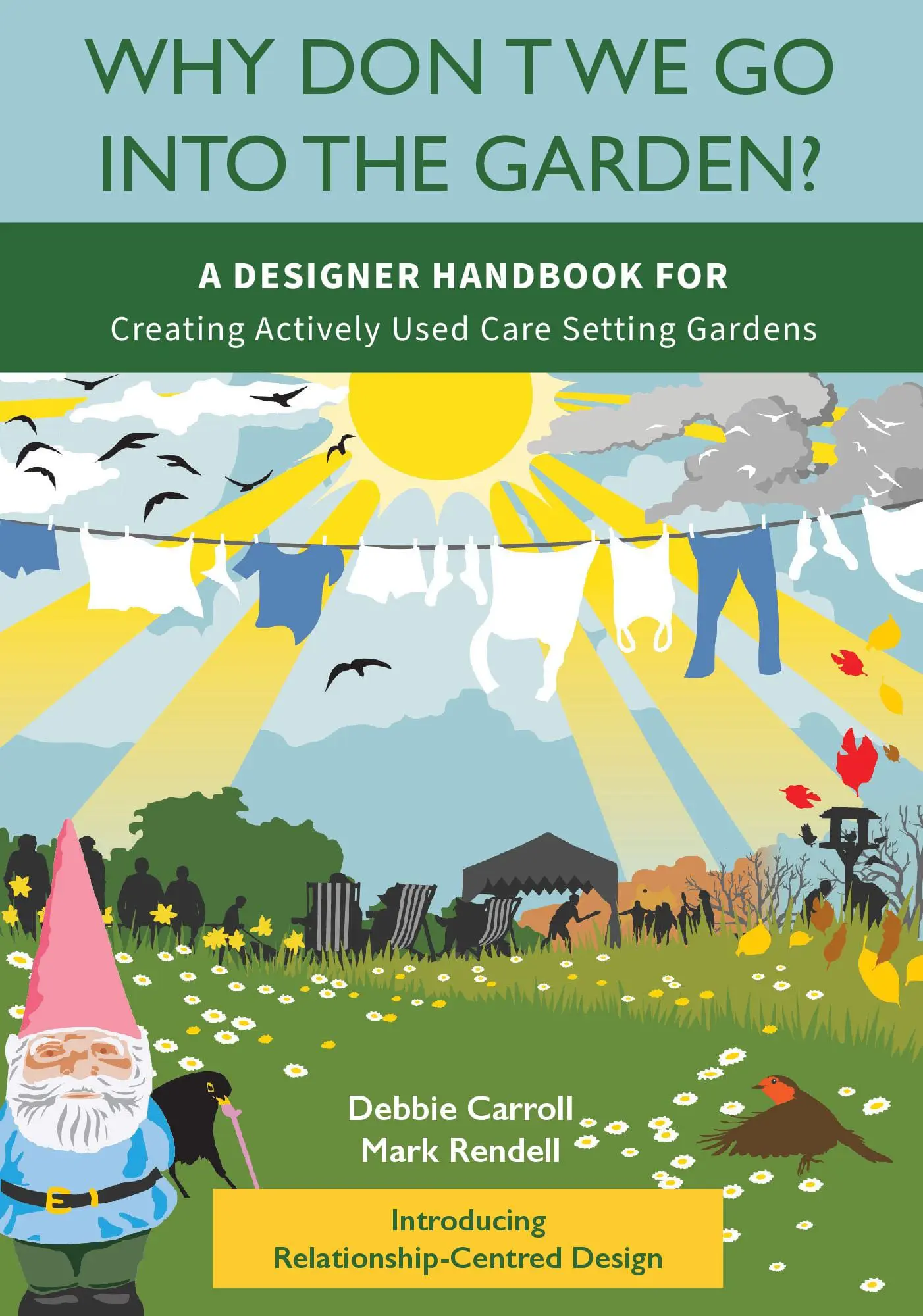
Description
Creating well-being, sensory and dementia friendly gardens in care homes and other organisational environments is both rewarding and challenging. The authors’ study was prompted from seeing many designed care and dementia gardens fall out of use once the initial novelty of a new space had worn off. They set out to understand what makes care gardens actively used for the long term and their findings are shared in this book through many insightful stories. This book supports garden designers in providing the most appropriate support alongside their clients to create well used and well-loved gardens for the long term benefit of the residents who live there.
The authors’ research identified a correlation between those care homes practicing more advanced, person-centred, care and greater engagement outside. This handbook sets out a new way for Care Settings and Landscape Designers to work together called ‘Relationship-Centred Design‘ ensuring this aspect influencing successful garden creation is considered in all stages of a design’s process.
Real-life stories illuminate this thought provoking book bringing to life how to ensure gardens are meaningfully developed and used, and with particular reference to people living with dementia. It guides the reader into taking into account the impact of the wider care organisation, the people supporting those who live there, and how, and even if, they enable the garden to be used by residents. This book should be in the tool box for all garden designers working with care, or other institutional, settings providing guidance from the first contact with a potential client, ensuring an appropriate initial brief and right through to implementation of a range of support that may be required.
The handbook provides a detailed and easy to use tool to support identifying the current ‘care culture’ influencing engagement. This is essential before creating any new design to reduce the risk of the investment in a garden that could go onto be under-used or abandoned in the long term. The approach explored in this handbook builds in the space and time for changes to care practices, organisational culture change, that are hindering engagement so they can be addressed before, or alongside, any design implementation, in a ‘Relationship-Centred Design’ approach.
A wider range of care related design insights are also explored including several hidden dangers where designers can inadvertently introduce new obstacles to engagement, avoiding adding gimmicks, along with some quick wins.
Finally, there is a ‘call to action’ for more research, in this under investigated field, on areas where conflicts exist between current garden design guidance and observed positive, yet contradictory, practices. The authors’ aim with this book is to support the continuing development of best practices for Garden Designers that is aligned with, and supportive of, the care sectors requirement to deliver person-centred care.
This handbook compliments the earlier published ‘Care Culture Map and Handbook’ package which supports care settings on a culture change journey to improved care practices and greater engagement outside and is part of the ‘Why don’t we go into the garden?’ series of books and tools. The two publications support the necessary changes in practices to both parties in creating a new care garden and give the greatest likelihood of an actively used garden for the long term.






Reviews
There are no reviews yet.