

Description
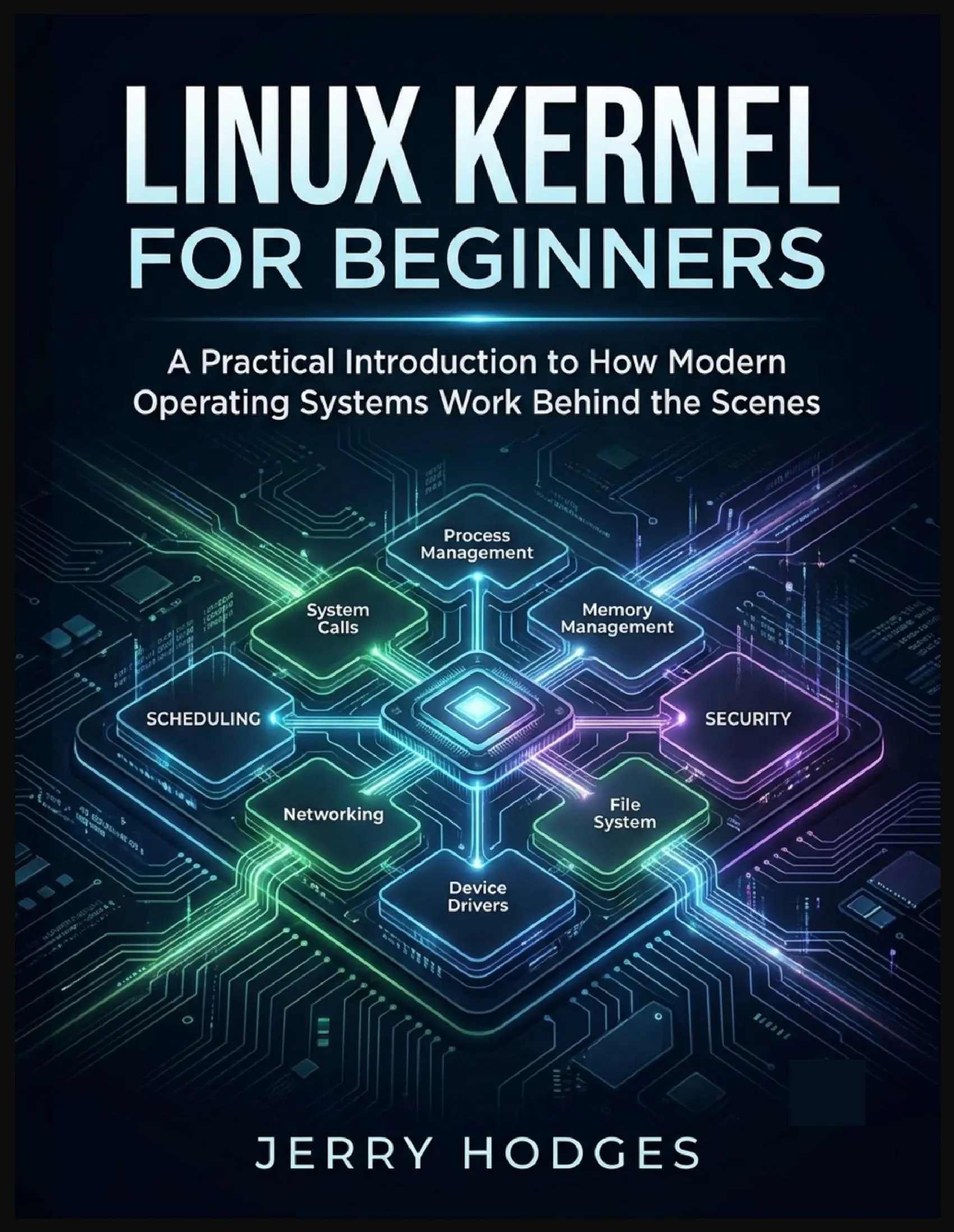
Linux Kernel for Beginners is a practical and approachable introduction to the core ideas behind the Linux kernel—the part of the operating system that manages memory, processes, devices, filesystems, networking, and system security.
Written for curious learners, aspiring system programmers, computer science students, and developers who want a clearer understanding of how Linux works behind the scenes, this book breaks complex kernel topics into structured, readable explanations without assuming deep prior experience in kernel development.
Inside, readers will explore:
- what the Linux kernel is and how it differs from distributions and user-space software
- how processes, threads, scheduling, and system calls work
- how memory management, filesystems, and storage are handled inside the kernel
- how device drivers and kernel modules extend kernel functionality
- how interrupts, deferred work, and networking operate at a high level
- how Linux uses permissions, capabilities, namespaces, cgroups, and protection mechanisms for security
- how to read kernel code, trace behavior, and continue learning with confidence
Rather than focusing only on theory, this book combines clear explanations with practical examples, command-line exploration, and beginner-friendly guidance for safe hands-on learning.
Whether you are studying operating systems, preparing to explore kernel internals, or simply want to understand the technology that powers Linux-based systems, Linux Kernel for Beginners offers a solid foundation and a clear next step into deeper technical learning.






Reviews
There are no reviews yet.