

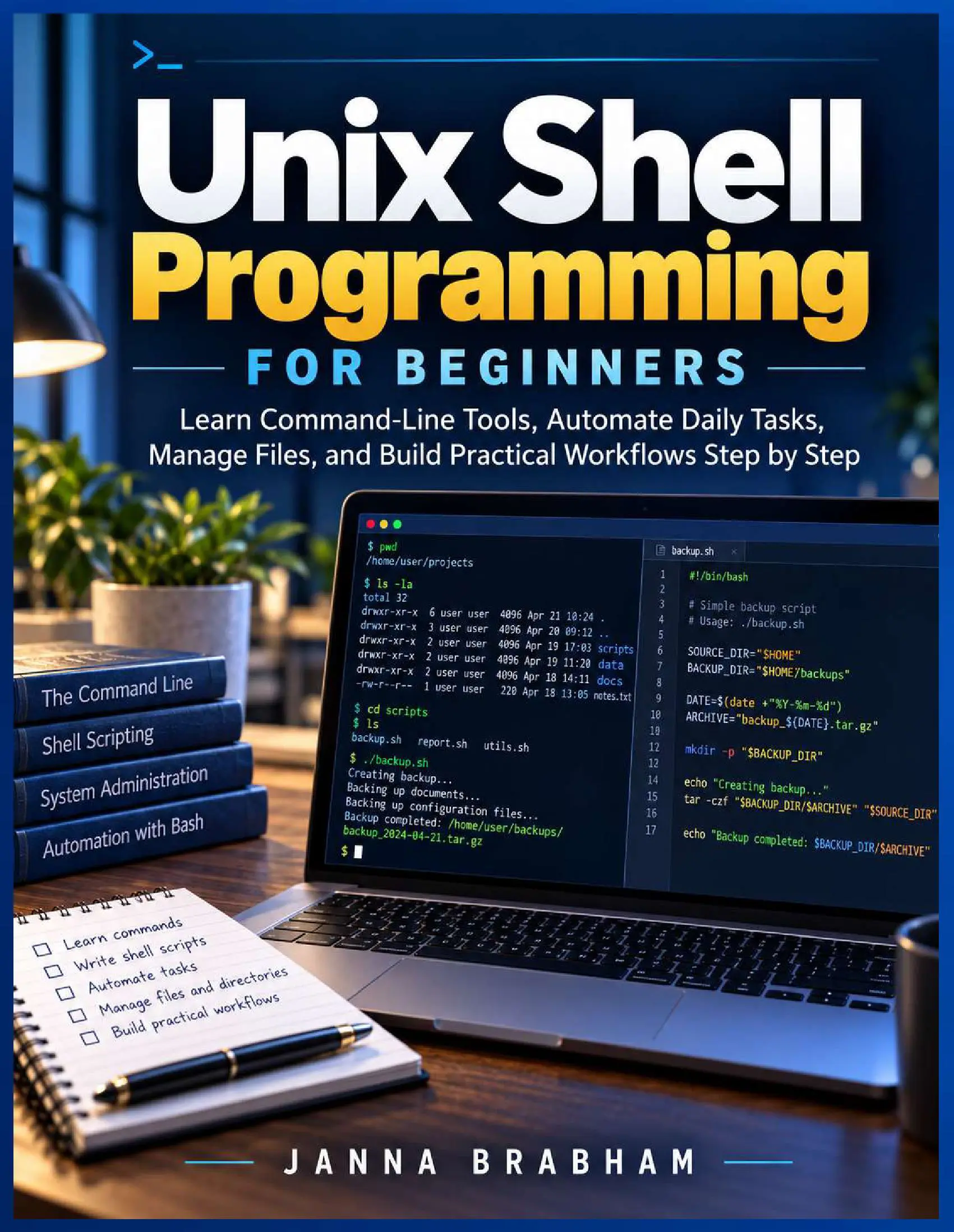
Description
Ready to move beyond clicking through menus and discover what you can accomplish from the command line?
Unix Shell Programming for Beginners provides a practical, step-by-step introduction to working with Unix-style command-line environments and shell scripts. Written for readers with little or no previous experience, this book explains essential concepts in clear language and gradually develops them into useful real-world skills.
Instead of overwhelming you with complicated theory, the book focuses on learning by doing. You will begin with basic terminal navigation and essential commands before progressing into file management, permissions, scripting, automation, data processing, system monitoring, networking, and practical workflows.
Inside, you will learn how to:
- Navigate the terminal and understand how Unix shell commands work
- Create, copy, move, organize, search, and manage files and directories
- Understand file ownership, permissions, paths, and important system locations
- Use command history, aliases, pipes, redirection, and other productivity features
- Write shell scripts using variables, user input, conditions, loops, and functions
- Automate repetitive tasks and schedule scripts
- Search and process text with tools such as grep, sed, and awk
- Work with processes, users, groups, system resources, and basic administration tasks
- Understand networking concepts, remote access, SSH, and file transfers
- Build practical projects including backup automation, file organization, system monitoring, and automated reports
- Debug scripts, improve reliability, and develop safer shell-programming habits
- Reinforce your knowledge with quick-reference guides and beginner practice exercises
Along the way, practical examples show how individual commands can be combined into useful workflows. You will also learn why checking paths, permissions, input, errors, and command results matters when working with automation.
The book concludes with reference material covering common Unix commands, shell scripting patterns, file permissions, terminal shortcuts, and hands-on exercises that can be used for continued practice.
Whether you are exploring programming, preparing for work with servers and system administration, learning automation, or simply want greater control over your computer, this book provides a structured foundation for developing practical command-line skills.
Start with the basics, practice each concept, and gradually turn simple commands into useful scripts and workflows.

Reviews
There are no reviews yet.