

Description
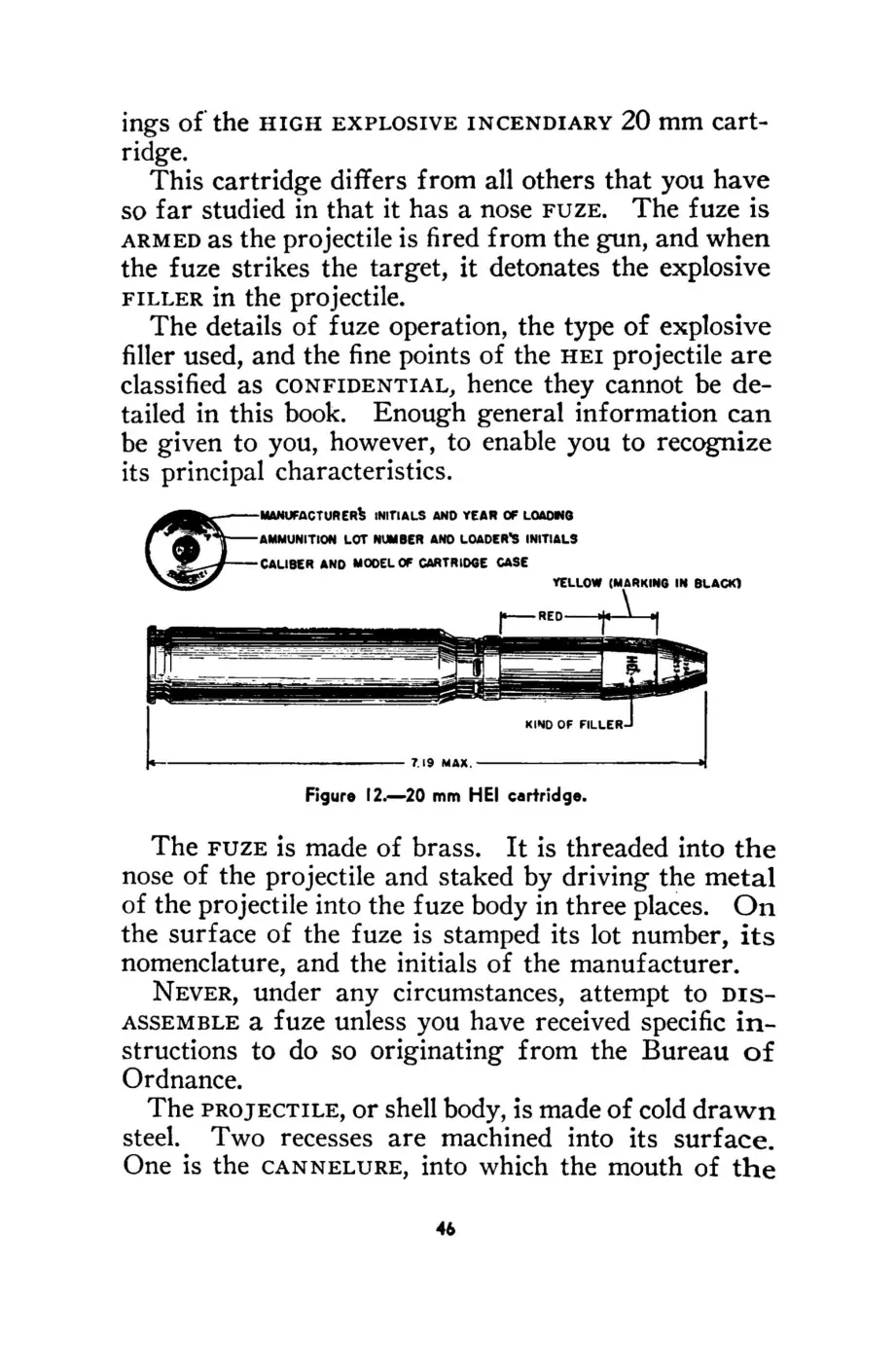
‘Aircraft Munitions’ is the U.S. Navy’s wartime classroom text on everything a naval aircraft could shoot, drop, launch, or lay — issued in 1944 as part of the famous Navy Training Courses series. Prepared by the Standards and Curriculum Division of the Bureau of Naval Personnel’s Training activity, and representing the joint endeavor of the Naval Air Training Command and BuPers’ Training Division, it was printed by the Government Printing Office and originally stamped RESTRICTED — a marking lined out on the scanned copy after the war. The scope is remarkable for a 200-page volume. Chapter 1, ‘Explosives and how they work,’ lays the scientific foundation: what makes an explosive, the difference between low and high explosives, initiators and boosters, and the explosive train. From there the book works systematically through the entire naval air arsenal. Chapter 2 covers gun ammunition for aircraft weapons; Chapter 3 covers bombs and their classes; Chapter 4 is devoted entirely to bomb fuzes — the delicate mechanisms that armed a weapon after release and detonated it at the right instant. Chapter 5 explains torpedoes, the fleet’s premier ship-killer as delivered by air; Chapter 6 covers rockets and rocket launchers, then a brand-new addition to naval air power; Chapter 7 treats mines; Chapters 8 and 9 cover pyrotechnics and smoke — flares, signals, markers, and screening devices; and Chapter 10 closes with destructors, the demolition devices used to keep secret equipment out of enemy hands. Written for the enlisted men — aviation ordnancemen above all — who had to handle, assemble, fuze, load, and maintain these weapons aboard carriers and at island air bases across the Pacific, the text assumes no prior technical education. It builds from first principles to practical service knowledge, because the men reading it would shortly be belting live ammunition and hanging armed bombs on Hellcats, Avengers, Helldivers, and patrol bombers. Historically, ‘Aircraft Munitions’ captures U.S. naval air ordnance at its 1944 peak — the precise moment when the fast-carrier task forces were sweeping the Central Pacific and aerial rockets were joining bombs and torpedoes in the fleet’s arsenal. For historians of naval aviation, modelers, curators, and families of the men who wore the aviation ordnanceman’s winged bomb, it is a window into the daily working world of the flight line and the bomb magazine. This is a carefully prepared reprint of the original wartime publication, reproduced from a complete scan of the 1944 printing (University of California copy). The original text, line drawings, and cutaway diagrams are preserved throughout, digitally cleaned for modern print reproduction.



Reviews
There are no reviews yet.